
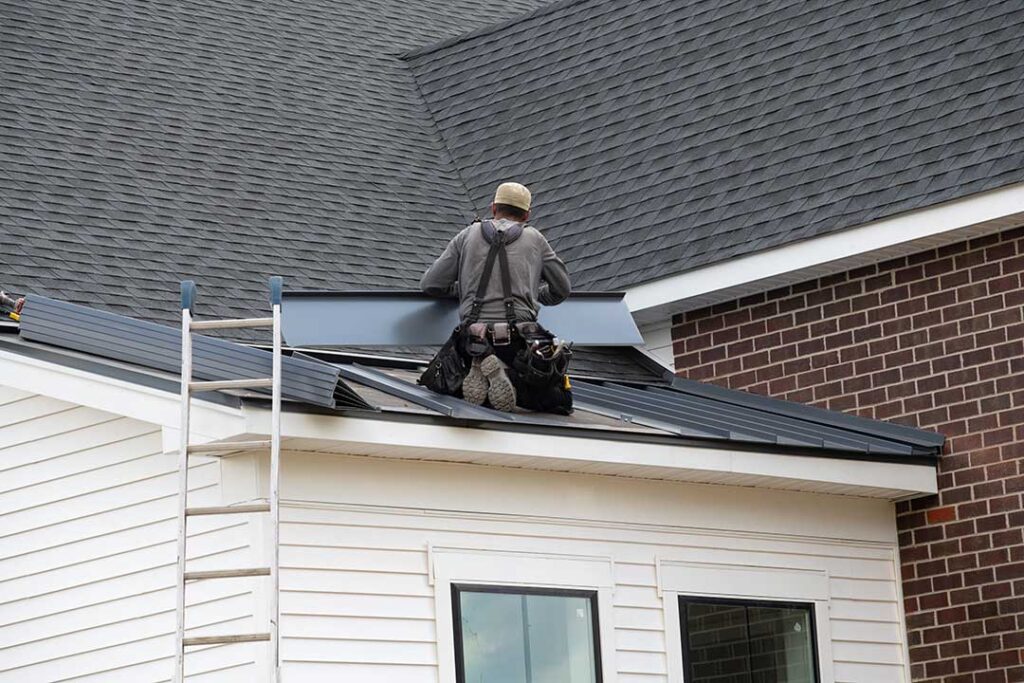
Rain gutters are part of a roof drainage system, not merely an exterior trim feature. They collect water running off the roof and direct it away from shingles, fascia boards, siding, windows, foundations, and walkways. In Sodus, NY, where roofs must handle spring rain, summer storms, autumn leaves, and winter snow and ice, properly functioning gutters can help prevent several common forms of water damage.
What role do gutters play in roof health?
Gutters protect the lower edges of a roof by controlling where rainwater goes after it leaves the shingles. Without a clear drainage path, water can collect along the eaves, soak roof-edge materials, or run down exterior walls.
A properly working gutter system helps:
- Reduce moisture exposure at the roof edge
- Protect fascia and soffit materials from rot
- Limit water reaching siding and window trim
- Reduce soil erosion near the foundation
- Move runoff away from entryways and walkways
- Lower the chance of ice-related drainage problems
Gutters do not make shingles waterproof or replace proper roof installation. Their function is to manage water after it flows down the roof surface. If gutters are clogged, damaged, or poorly sloped, the roof and surrounding parts of the home may be exposed to moisture that would otherwise be directed away.
How can clogged gutters damage a roof?
Clogged gutters can cause water to back up beneath the roof edge. Leaves, twigs, seed pods, and other debris may block the channel or downspout, especially during autumn.
When backed-up water remains in the gutter, several problems can develop:
- Water may overflow onto fascia boards and soffits.
- Saturated wood may begin to soften or decay.
- Moisture can reach the edge of the roof decking.
- Overflowing water may stain or damage siding.
- In cold weather, trapped water can freeze and expand.
A clogged downspout can be just as serious as a clogged gutter. The visible channel may appear clear while water remains unable to leave the system. During a heavy storm, the gutter may fill quickly and spill over at a single location.
Overflow patterns can provide useful clues. Water spilling from the middle of a gutter often suggests a blockage or inadequate capacity. Water leaking from a joint may indicate a failed seal or a shifted section. Water pooling near a downspout outlet may mean the underground extension or discharge area is obstructed.
Can gutters cause roof leaks?
Gutters do not usually create a roof leak by themselves, but poor drainage can contribute to conditions that lead to leaks. Water may collect at the roof edge, remain against wood components, or enter areas where flashing and underlayment are already weakened.
A roof leak near an exterior wall does not automatically mean the gutter is the only problem. Possible sources include:
- Damaged or missing shingles
- Deteriorated flashing
- Openings around vents or chimneys
- Ice-related damage at the eaves
- Rot in the roof edge or fascia
- Water overflowing from a blocked gutter
This is why the location of an interior stain may not identify the true source. Water can travel along roof decking, framing, or insulation before appearing inside the home. A stain near a ceiling edge should be treated as evidence of moisture, not proof that the gutter alone is responsible.
Why are downspouts so important?
Gutters only work as intended when downspouts move collected water far enough away from the building. If a downspout releases water directly beside the foundation, the roof drainage system may simply be transferring the problem from one location to another.
Downspouts should discharge onto a stable area where water can flow away from the foundation without creating erosion. Extensions may be useful where the outlet is too close to the house, but they should not create a tripping hazard or direct water toward a neighboring property, basement entrance, or low section of the yard.
A downspout can also become disconnected during strong winds, snow movement, or accidental impact. When that happens, water may pour against the wall rather than travel through the intended outlet. Checking the connection after major storms is a practical maintenance step.
How does winter weather affect gutters and roof edges?
Winter adds several challenges to roof drainage. Snow can cover the gutter, ice can form inside it, and repeated freezing and thawing can place stress on joints and fasteners.
Ice buildup along the eaves may contribute to ice dams. An ice dam forms when melting snow flows toward a colder roof edge and refreezes there. The resulting ice can obstruct drainage and allow water to move beneath shingles. Ice dams are influenced by attic insulation, ventilation, roof shape, air leakage, snow conditions, and outdoor temperature—not just gutter condition.
Gutters may also become heavy when filled with ice or packed snow. That extra weight can pull on hangers and fascia boards. Removing heavy ice from a roof edge can be hazardous and may damage shingles if done aggressively. Roof rakes and other tools must be used carefully, and climbing onto an icy roof presents a serious fall risk.
How often should gutters be checked in Sodus?
Most homes benefit from checking gutters at least twice a year: once in spring and again after the main leaf drop in autumn. Additional checks may be useful after severe storms, especially if the property has mature trees or the roof is surrounded by branches.
A basic inspection should look for:
- Sagging sections
- Loose or missing hangers
- Separated seams
- Cracks or rust-through areas
- Blocked gutter channels
- Downspouts that are disconnected or dented
- Water marks beneath the eaves
- Soil erosion near discharge points

Gutters should also be checked after nearby construction, tree work, or high winds. Small amounts of debris can enter a system even when trees are not directly over the roof.
Do gutter guards eliminate maintenance?
Gutter guards can reduce the amount of large debris entering a gutter, but they do not eliminate inspection or cleaning. Small seeds, roof granules, pine needles, and windblown material may still collect on top of or beneath the guard. Some designs can also become difficult to inspect once debris accumulates.
A covered gutter system still needs periodic review to confirm that:
- Water is flowing through the system
- Debris is not collecting at the edges
- Guards remain securely attached
- Downspouts are open
- Ice and snow are not placing excessive weight on the gutters
The suitability of a guard depends on the roof design, surrounding trees, gutter style, and the type of debris present. A system that performs well on one home may not work as well on another.
What signs show that gutter problems may be affecting the roof?
Certain warning signs deserve attention because they may indicate that water is not being controlled properly:
- Peeling paint or staining along fascia boards
- Dampness beneath the roof edge
- Water marks on exterior walls
- Sagging or pulling gutters
- Shingle granules collecting below downspouts
- Mold or persistent discoloration near soffits
- Basement moisture near the outside wall
- Eroded soil beneath roof valleys or gutter outlets
- Water overflowing during ordinary rainfall
These signs do not always mean the roof needs replacement. In many cases, the cause may be a blocked outlet, loose fastener, failed seam, or drainage path that is too short. Identifying the source early can prevent a minor drainage issue from becoming concealed wood damage.
Roof edges and gutters are especially easy to overlook because they sit above eye level. A seasonal inspection from the ground, combined with safe cleaning practices, helps maintain the connection between the roof and the rest of the home’s water-management system.
