
Why tree limbs are a roof concern
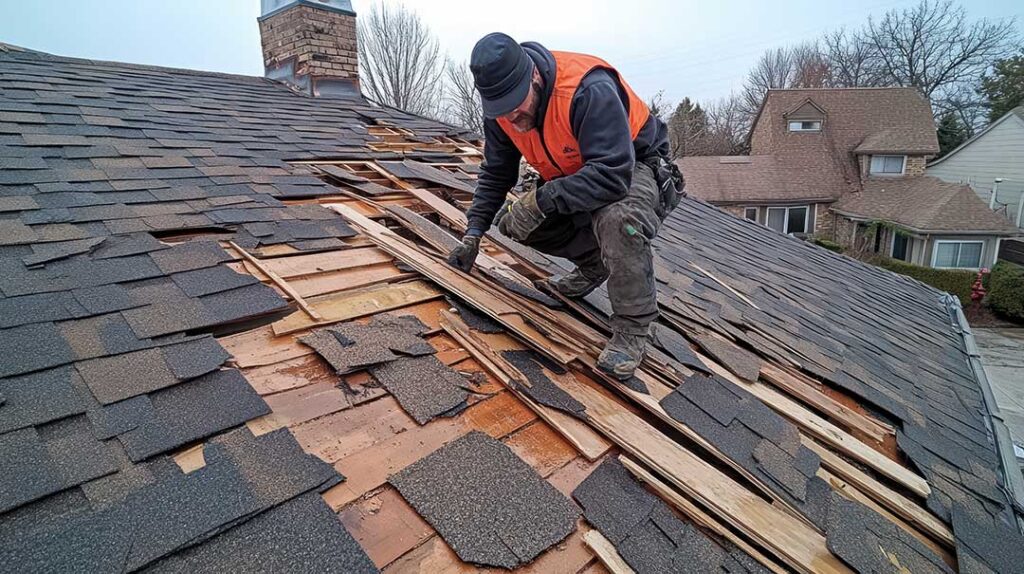
Tree limbs can damage a roof even when they do not fall completely. A branch rubbing against shingles, dropping small debris, or striking the roof during a windstorm may gradually weaken the roofing system and allow water to enter.
For residents of Sodus, NY, trees are a familiar part of the landscape around older homes, wooded lots, farm properties, and neighborhoods with mature plantings. Seasonal wind, wet snow, ice, and freeze-thaw cycles can increase the strain on both trees and roofs. The risk is not limited to major storms; repeated minor contact can create problems that are easy to overlook.
What kinds of damage can a limb cause?
The severity depends on the limb’s size, height, condition, and the part of the roof it contacts. Common forms of damage include:
- Broken or lifted shingles: A branch can scrape away the protective surface or catch the edge of a shingle and lift it.
- Punctures: Larger limbs may break through shingles, underlayment, roof decking, or even attic framing.
- Damaged flashing: Branches can bend metal flashing around chimneys, vents, skylights, and roof edges.
- Gutter damage: Falling limbs may pull gutters away from the fascia or dent and block them with leaves and twigs.
- Roof edge damage: Eaves, rakes, and soffits are especially exposed to impact from falling branches.
- Moisture retention: Small sticks and leaves can collect in valleys or behind roof features, keeping shingles damp for long periods.
- Moss and organic growth: Persistent shade and trapped moisture can encourage moss or algae growth, which may shorten the useful life of some roofing materials.
A limb does not have to create a visible hole to cause trouble. A cracked shingle or loosened flashing component may not leak until the next period of wind-driven rain.
How does rubbing from a branch damage shingles?
A branch that repeatedly touches the roof can wear through the granules on asphalt shingles. These granules protect the shingle from sunlight and weather. Once they are displaced, the underlying material becomes more vulnerable to aging.
Rubbing may also:
- Tear or crease shingle tabs
- Expose nail heads
- Create small cracks that expand during temperature changes
- Dislodge protective coatings
- Make noise that signals movement during windy conditions
The damage can be gradual. A limb that appears harmless on a calm day may move several inches during strong gusts. Over time, that motion can affect the same area repeatedly.
Branches touching the roof should not be trimmed by pulling, climbing, or cutting from the roof surface. Wet shingles are slippery, and even a small limb can shift unexpectedly.
Which trees and branches deserve closer attention?
The most concerning limbs are not always the largest ones. Dead, cracked, split, or partially detached branches can fall with little warning. A branch with visible decay may be lighter than a healthy one, but its weakened connection makes it unpredictable.
Pay particular attention to limbs that are:
- Directly above the roof, porch, garage, or other structure
- Hanging over roof valleys or gutters
- Split at a major branch union
- Covered in dead twigs or missing bark
- Leaning toward the house
- Resting on utility lines or other branches
- Close enough to scrape the roof during ordinary wind
Trees with multiple stems, visible trunk cavities, or soil movement around the roots may also need careful evaluation. Heavy snow and ice can add weight to branches during winter, while saturated soil and strong winds can reduce a tree’s stability.
Can leaves and small twigs damage a roof without a major impact?
Yes. Leaves, seed pods, and small twigs can collect in roof valleys, around skylights, behind chimneys, and along gutter edges. These materials can hold moisture against roofing components and slow drainage.
On a sloped roof, debris may also create dams that redirect water under nearby shingles. In freezing weather, trapped moisture can expand and contract repeatedly. That process may worsen small cracks, loosen flashing, or contribute to leaks around roof penetrations.
Debris in gutters creates a related problem. Blocked gutters can cause water to spill over the edge, wet the fascia, and collect near the foundation. During cold weather, standing water can freeze and add weight to the gutter system.
What should homeowners look for after a storm?
A roof inspection after high wind or heavy snow should begin from the ground. Binoculars can help identify visible problems without requiring anyone to climb onto the roof.
Look for:
- Missing, curled, or displaced shingles
- Freshly broken branches on or near the roof
- Shingle granules gathered below downspouts
- Bent gutters or separated gutter sections
- Damaged vents, flashing, or chimney components
- New water stains on ceilings or upper walls
- Daylight visible through the attic roof decking
- Damp insulation, wet wood, or a musty attic odor
A leak may appear some distance from the original impact point because water can travel along roof decking, insulation, or framing before entering the living space. A ceiling stain should therefore be treated as evidence of moisture, not necessarily as proof that the visible spot is directly below the damage.
What is safe to do if a limb falls on the roof?
If a branch has landed on the roof, keep people away from the area below it. Do not walk beneath a suspended limb, pull on it from the ground, or climb onto the roof to remove it. Branches can be under tension and may spring or roll when disturbed.
If electrical lines are involved, maintain distance and treat the area as hazardous. A damaged roof may also expose sharp roofing materials, unstable decking, or broken glass from a skylight.
For minor debris that is safely reachable from the ground, removal may be possible with a long-handled tool. Anything resting on the roof, tangled in utility lines, attached to a damaged tree, or near a steep or slippery surface requires greater caution. Safety and electrical clearance take priority over immediate cleanup.
Does tree trimming prevent all roof damage?
No, but it can reduce the likelihood and severity of damage. Keeping limbs from contacting the roof helps prevent abrasion, while removing dead or structurally weak branches lowers the risk of impact.
Trimming should account for the tree’s health and natural growth pattern. Cutting too aggressively can stress a tree, encourage weak regrowth, or create larger wounds. Large branches near a structure, power line, or difficult climbing area present a genuine hazard and may require specialized safety equipment and knowledge.
Pruning is most effective as preventive maintenance. Waiting until a branch has already fallen may leave fewer safe options and increase the chance of roof, gutter, siding, or electrical damage.
How should tree-related roof damage be documented?
Photographs taken from the ground can help record the condition after a storm. Include wide views showing the tree and roof, followed by closer views of broken shingles, damaged flashing, gutters, or interior stains. Note the approximate date of the storm and whether water entered the building.
Temporary protection may be appropriate when there is an active opening and weather is expected, but coverings must be secured safely and should not involve climbing onto an unstable roof. Interior water should be collected away from electrical fixtures, and wet materials should be monitored for additional damage.
Regular observation, careful pruning, and prompt attention to small roof changes can limit the effects of trees around area homes. The goal is not to remove every tree near a house, but to recognize which limbs create contact, debris, or impact risks before a routine weather event turns them into a roof problem.
